Slipped Disc vs Muscle Strain: How to Tell the Difference
Lower back pain is incredibly common, but identifying what’s causing it isn’t always straightforward.
Two possible causes are a slipped disc (disc herniation) and a muscle strain. Although both can cause significant discomfort, they affect different structures and may require different approaches to recovery.
Understanding the differences can help you recognise your symptoms and know when to seek professional advice.
What Is a Slipped Disc?
A slipped disc occurs when the soft inner material of a spinal disc pushes through a weakened or damaged area of its outer layer.
Despite the name, the disc doesn’t actually slip out of place.
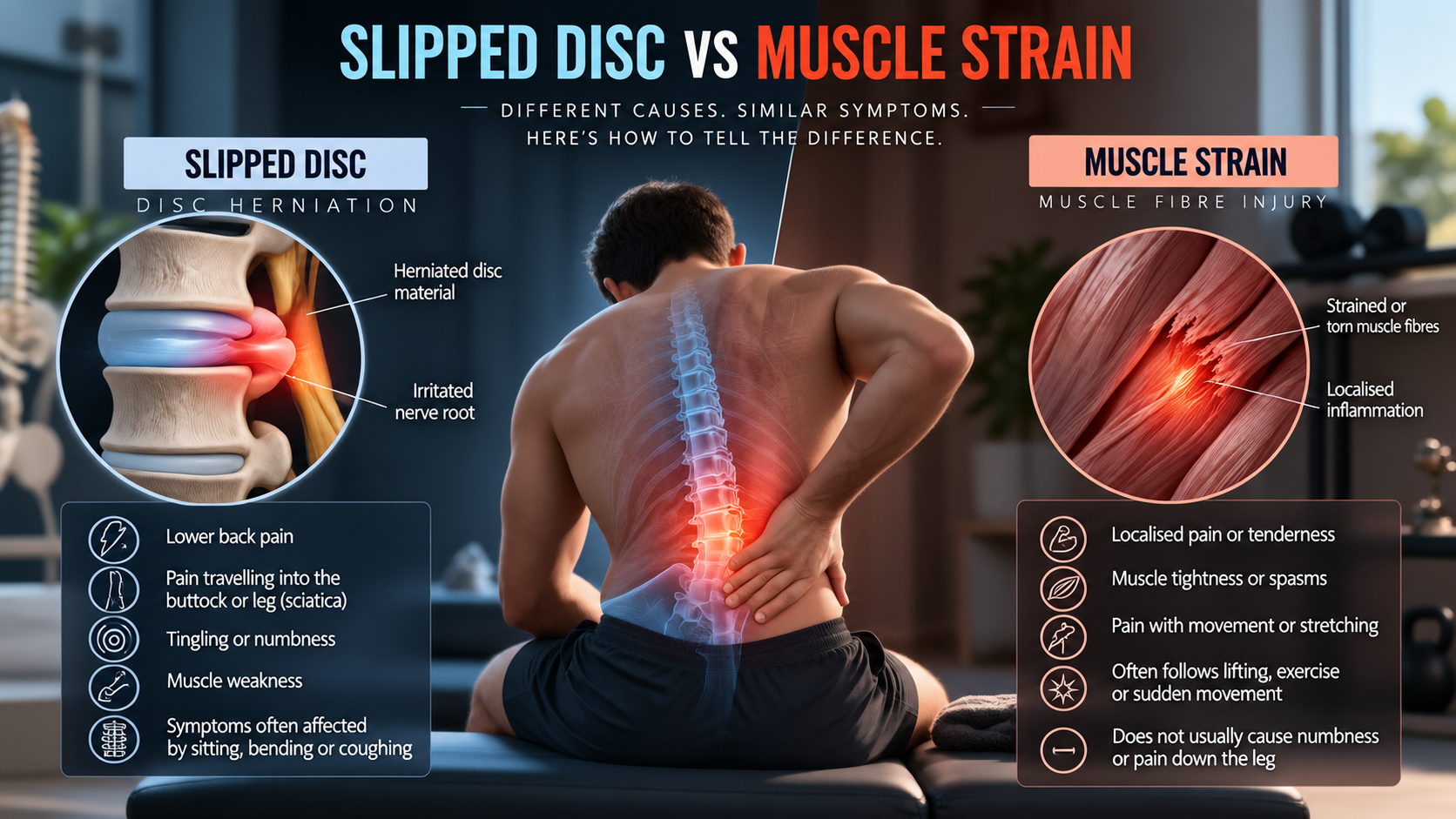
If the affected disc irritates or compresses a nearby nerve, symptoms may include:
– Lower back pain
– Pain travelling into the buttock or leg (sciatica)
– Tingling or numbness
– Muscle weakness in the affected leg
– Discomfort with certain movements or positions
Not every slipped disc causes symptoms, and many improve with appropriate conservative management. Although leg pain, tingling and numbness may suggest nerve involvement, these symptoms do not necessarily confirm a disc herniation. Equally, a disc problem may cause back pain without obvious leg symptoms.
What Is a Muscle Strain?
A muscle strain occurs when muscle fibres are overstretched or injured, often following sudden movement, heavy lifting or an activity the body isn’t accustomed to.
Common symptoms include:
– Localised pain or tenderness
– Muscle tightness or spasms
– Pain when contracting or stretching the affected muscles
– Stiffness and reduced movement
– Discomfort during everyday activities
Unlike a disc-related nerve problem, a simple muscle strain doesn’t typically cause numbness, tingling or radiating nerve pain down the leg.
How Can You Tell the Difference?
Although symptoms can overlap, certain characteristics may help distinguish the two.
Slipped Disc:
– May cause pain travelling down the leg
– Can produce tingling, numbness or weakness
– Symptoms may change with sitting, bending or coughing
– May involve irritation of a spinal nerve
Muscle Strain:
– Usually causes more localised discomfort
– Often follows lifting, exercise or sudden movement
– May be tender when pressing the affected muscles
– Pain is commonly aggravated by stretching or muscle contraction
However, symptoms alone cannot reliably confirm the diagnosis. A clinical assessment is important, particularly if pain persists or neurological symptoms develop.
Do You Need an MRI to Diagnose a Slipped Disc?
Examination and clinical history often guide the initial management, and MRI is generally reserved for circumstances where findings are likely to change treatment or specialist decisions.
What Can Help Recovery?
For many cases of uncomplicated back pain, remaining gently active is more beneficial than prolonged bed rest.
Recovery may involve:
– Maintaining comfortable everyday movement
– Temporarily reducing activities that aggravate symptoms
– Gradually rebuilding strength and mobility
– Avoiding prolonged inactivity
– Returning progressively to normal exercise and work
The aim is to restore movement and function without repeatedly aggravating the affected area.
Many cases improve over time, although recovery varies depending on the condition and severity.
How Chiropractic Care Can Help
At Isis Chiropractic Centres, we recognise that back pain can have several contributing factors, and that the most appropriate treatment depends on the individual rather than simply the diagnostic label.
Your chiropractor will begin with a detailed consultation and examination, which may include assessment of spinal movement, muscles, joints and neurological function.
Depending on the findings, your individual care plan may include:
- Advice and education to help you understand and manage your condition
- Appropriate spinal mobilisation or manipulation
- Soft-tissue and muscle therapy
- Targeted rehabilitation exercises to restore movement, strength and confidence
- A gradual return to normal activities, work and exercise
For selected patients, additional treatment options such as IDD Therapy may be discussed, with consideration of the available evidence, suitability and individual circumstances.
Where further investigation or medical assessment is indicated, we will explain the appropriate next steps.
Our aim is not simply to relieve symptoms, but to help you move better, recover your confidence and return to the activities that matter to you.
When Should You Seek Medical Attention?
Most episodes of lower back pain aren’t caused by a serious condition, but certain symptoms require urgent assessment.
Seek emergency medical attention if back pain is accompanied by:
– New difficulty passing urine or loss of bladder or bowel control
– Numbness around the groin or saddle area
– Severe or progressive weakness in the legs
These can indicate serious nerve compression requiring immediate medical assessment. new or worsening bladder difficulties, saddle sensory changes, and severe or progressive neurological deficits require immediate emergency assessment.
The Key Takeaway
A slipped disc and a muscle strain can feel surprisingly similar, but the structures involved and the symptoms they produce may differ.
Pain travelling down the leg, numbness or tingling may suggest nerve involvement, while localised tenderness and pain with muscle activity may be more consistent with a strain.
Rather than guessing the cause or simply waiting for symptoms to disappear, a professional assessment can help determine the most appropriate next steps.
At Isis Chiropractic Centres, we can assess your back pain and develop an individual treatment and rehabilitation plan to help you move more comfortably and confidently again.
Not Sure What’s Causing Your Back Pain?
Back pain can be frustrating, particularly when you’re unsure whether the problem involves a muscle, joint or spinal disc.
At Isis Chiropractic Centres, we take the time to understand your symptoms, assess the possible causes and explain your treatment options.
With clinics in Milton Keynes, Northampton and Aylesbury, our experienced teams offer individualised care focused on helping you move better, feel better and return to the activities you enjoy.
Book an assessment at your nearest Isis Chiropractic Centre.