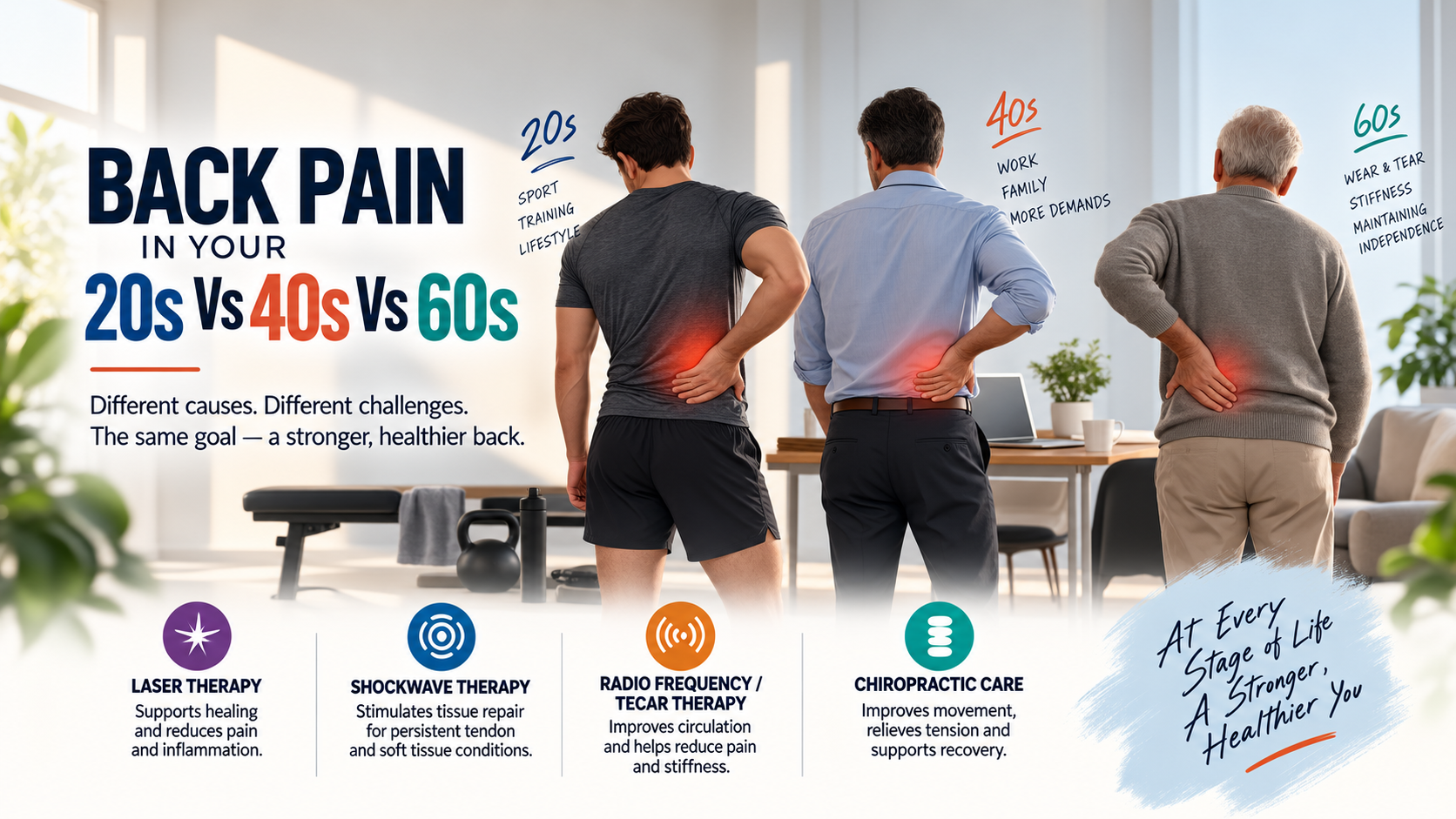
Back Pain in Your 20s Vs 40s Vs 60s

Back pain can affect you at almost any age, but the factors contributing to it can change throughout your life.
From training loads and long hours sitting in your 20s, to increasing work and family demands in your 40s, and changes in strength and mobility later in life — understanding what may be contributing to your pain can help you manage it more effectively.
 Back Pain in Your 20s
 Back Pain in Your 20s
Being young doesn’t automatically protect you from back pain.
In your 20s, symptoms may be associated with sport, gym training, prolonged sitting, sudden increases in activity or simply doing more than your body is currently prepared for.
Common contributing factors can include:
- Training errors or sudden increases in exercise
- Repetitive lifting or physical work
- Long periods sitting at a desk
- Reduced mobility or muscle strength
- Previous sporting injuries
The good news is that building strength, movement and good training habits early can help create a more resilient back for the future.
Back Pain in Your 40s
 Back Pain in Your 40s
By your 40s, life can look very different.
Work, family responsibilities and less time for exercise can mean more sitting, less recovery and fewer opportunities for regular movement.
Previous injuries may also become more noticeable, particularly if strength and activity levels have gradually reduced.
The focus at this stage is often on maintaining mobility and strength while finding realistic ways to stay active around everyday responsibilities.
Small changes — such as regular walking, strength training and breaking up prolonged sitting — can make a meaningful difference.
Back Pain in Your 60s and Beyond
 Back Pain in Your 60s and Beyond
Age-related changes to the spine are common, but they don’t automatically mean pain or loss of independence.
Maintaining strength and regular movement becomes particularly important as we get older.
Treatment and rehabilitation may focus on:
- Maintaining comfortable spinal movement
- Improving strength and balance
- Staying physically active
- Managing stiffness
- Maintaining confidence with everyday activities
Rather than avoiding movement because of age, appropriate exercise can help the body remain strong, mobile and capable.
How Chiropractic Treatment Can Help
 How Chiropractic Treatment Can Help
Whatever your age, back pain doesn’t always have one simple cause.
Chiropractic treatment may incorporate joint mobilisation, manual therapy, soft-tissue techniques and targeted rehabilitation depending on your symptoms and individual needs.
The aim is not simply to temporarily reduce discomfort, but to improve movement and help you develop the strength and confidence needed to return to normal activity.
Advanced Treatments to Support Recovery
 Advanced Treatments to Support Recovery
Where appropriate, additional treatments available at Isis Chiropractic Centres may complement hands-on treatment and rehabilitation.
 Laser Therapy may help manage pain and inflammation where these are affecting movement and recovery.


The Key Takeaway
 The Key Takeaway
Your back doesn’t suddenly become fragile as you get older.
The challenges may change from your 20s to your 40s and 60s, but regular movement, appropriate strength and managing the demands placed on your body remain important at every stage of life.
If back pain is persistent or repeatedly returning, understanding why it is happening is often more useful than simply accepting it because of your age.
At Isis Chiropractic Centres, we can assess the factors contributing to your symptoms and create an individual treatment and rehabilitation plan designed around your body, lifestyle and stage of life.