How to Get Out of Bed With Back Pain: Simple Ways to Make Mornings Easier
Getting out of bed should be one of the simplest parts of your morning. However, if you experience back pain, even the smallest movements can sometimes feel uncomfortable.
You might find yourself struggling to sit upright, feeling a sharp pull in your lower back when you stand, or needing a few minutes to straighten up before you can start your day.
For some people, the discomfort is particularly noticeable when moving from lying down to sitting or standing. Understanding how you move during these moments can help you avoid unnecessary strain and make your mornings more manageable.
Why Can Getting Out of Bed Make Back Pain Worse?
Moving from a lying position to standing involves several different muscles and joints working together. Your abdominal muscles, hips, pelvis and spinal muscles all contribute to the movement.
When your back is already sensitive or uncomfortable, certain movements may aggravate your symptoms.
For example:
- Twisting suddenly: Rotating your upper body while your hips remain in place can aggravate an already sensitive back.
- Sitting straight up: Using your abdominal and back muscles to lift your upper body directly from a lying position can be uncomfortable for some people.
- Moving too quickly: Standing up suddenly without giving yourself time to adjust may make existing stiffness or discomfort more noticeable.
- Being inactive for long periods: Remaining in one position overnight can leave you feeling stiff when you first start moving.
These factors do not necessarily mean you have damaged your spine. Back pain can have several contributing causes, and the movements that aggravate it can vary between individuals.
How to Get Out of Bed More Comfortably
If you regularly experience discomfort when getting up, changing the way you move may help.
Here are a few simple techniques worth trying.
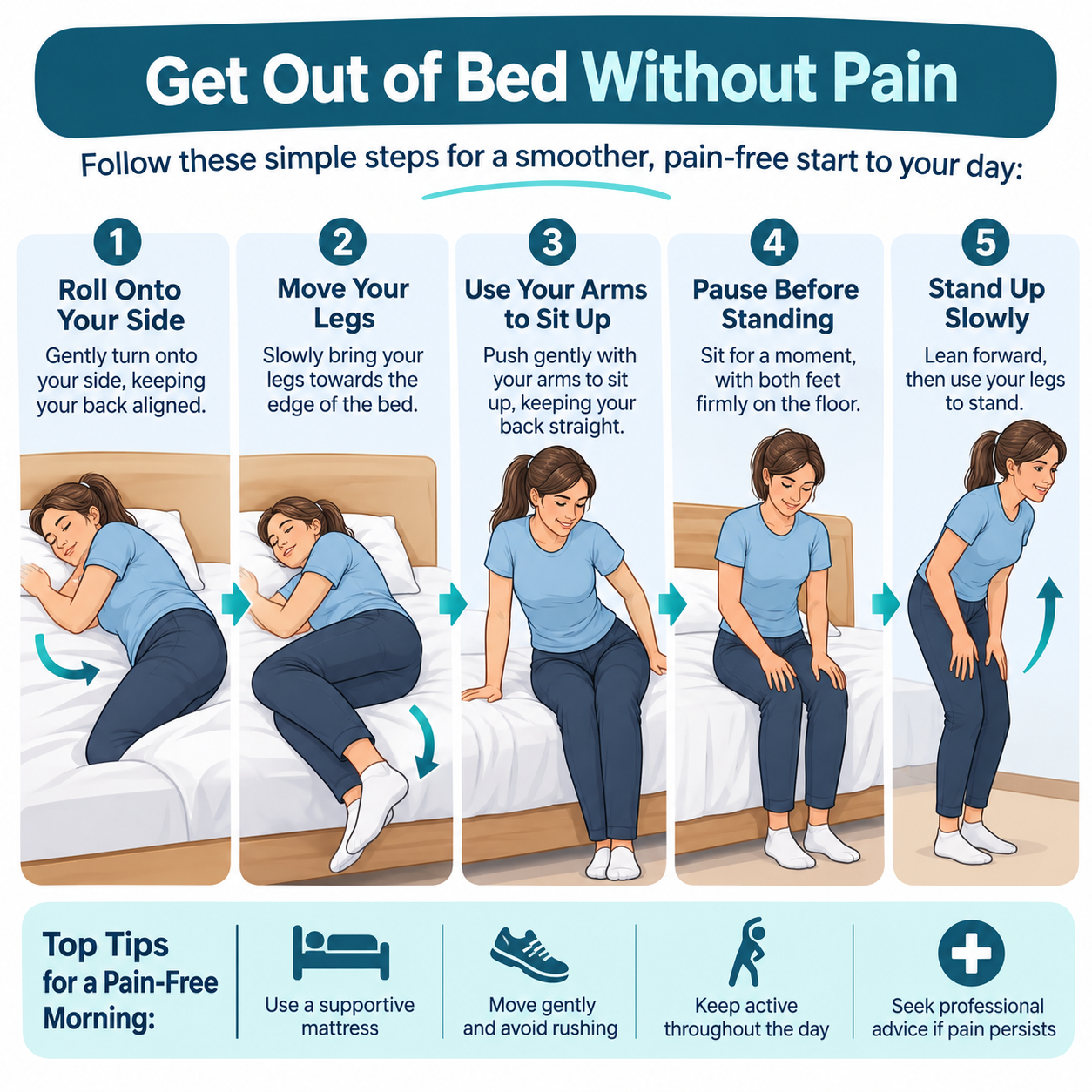
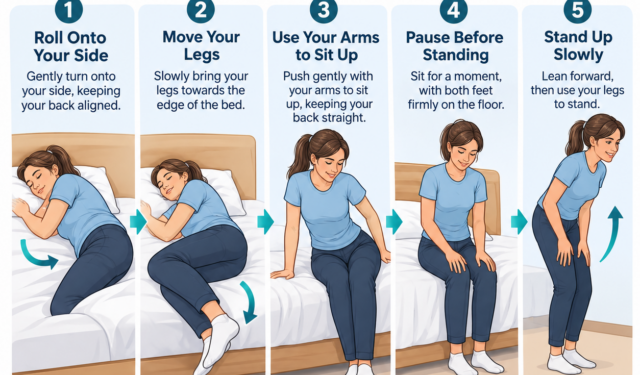
1. Roll Onto Your Side First
Rather than sitting straight up, gently roll onto your side.
Try to move your shoulders and hips together, avoiding a sudden twisting movement through your lower back.
2. Move Your Legs Towards the Edge of the Bed
Once you’re lying on your side, slowly bring your legs towards the edge of the mattress.
Allow your feet to move towards the floor as you prepare to sit upright.
3. Use Your Arms to Help You Sit Up
Place your hands or forearms against the mattress and gently push yourself into a sitting position while lowering your legs over the edge.
This allows your arms to assist with the movement rather than relying entirely on your abdominal and back muscles.
4. Take a Moment Before Standing
Once seated, give yourself a moment to adjust.
Place both feet firmly on the floor and avoid rushing straight into standing. When you’re ready, lean forward comfortably and use your legs and arms for support as you stand.
If you feel dizzy, unsteady or significantly more uncomfortable, pause and seek appropriate advice.
Should You Stay in Bed If Your Back Hurts?
It can be tempting to remain in bed when your back is uncomfortable, particularly if getting up feels difficult.
However, prolonged bed rest is generally not recommended for most uncomplicated episodes of back pain.
Gentle movement and gradually returning to normal daily activities, within your comfort levels, can be helpful. This doesn’t mean forcing yourself through severe pain or immediately returning to strenuous activities.
Instead, try to introduce manageable amounts of movement throughout the day.
For further guidance, see our existing advice on back care and exercise.
What If Your Back Pain Continues After Getting Up?
Occasional stiffness or discomfort doesn’t necessarily indicate a serious problem. However, if getting out of bed becomes increasingly difficult, or your pain continues throughout the day, it may be worth investigating further.
Some possible contributing factors include:
- Muscle strains or irritation.
- Restricted movement in the spinal joints.
- Disc-related problems.
- Irritation of nerves in the lower back.
- Hip or pelvic joint problems.
If you also experience pain travelling into your buttock or leg, tingling, numbness or weakness, this may indicate nerve involvement.
You can read more about the symptoms and possible causes in our guide to sciatica.
Remember, similar symptoms can have different causes. A proper assessment is important rather than assuming that every episode of back pain is caused by the same problem.
When Should You Seek Professional Advice?
If back pain is repeatedly affecting your ability to get out of bed, interfering with everyday activities or failing to improve, consider speaking to an appropriate healthcare professional.
A chiropractor or other qualified healthcare professional can assess your symptoms, movement and relevant medical history to help establish what may be contributing to the discomfort.
It is also important to recognise symptoms that need urgent medical attention. New numbness around the genitals or anus, changes in bladder or bowel control, or significant or worsening weakness in both legs require immediate assessment at A&E.
Sudden severe or rapidly worsening back pain, particularly if accompanied by feeling feverish or generally unwell, also warrants urgent medical advice.
How Can Isis Chiropractic Centres Help?
When back pain makes everyday activities difficult, even something as simple as getting out of bed can become frustrating.
At Isis Chiropractic Centres, we take the time to understand your symptoms, how they affect your daily life and what may be contributing to your discomfort.
Our chiropractors carry out an individual assessment, including examination of movement, muscles, joints and neurological function where appropriate.
Depending on your needs, your care plan may include advice and education, chiropractic treatment, soft-tissue therapy and targeted rehabilitation exercises to help you regain comfortable movement and confidence.
Our approach is focused on helping you understand your condition, manage your symptoms and return to the activities that matter to you.
If back pain is affecting your mornings, you can learn more about our approach on our Back Pain Treatment and Chiropractic Care page or arrange an assessment at your nearest Isis Chiropractic Centre.
Start Your Morning With More Confidence
Back pain shouldn’t have to dictate how you start your day.
Small changes to the way you move when getting out of bed may help make mornings more manageable. However, if discomfort continues or starts affecting your everyday routine, understanding what’s causing it is an important next step.
At Isis Chiropractic Centres, our team is here to help you understand your symptoms and discuss the options available.