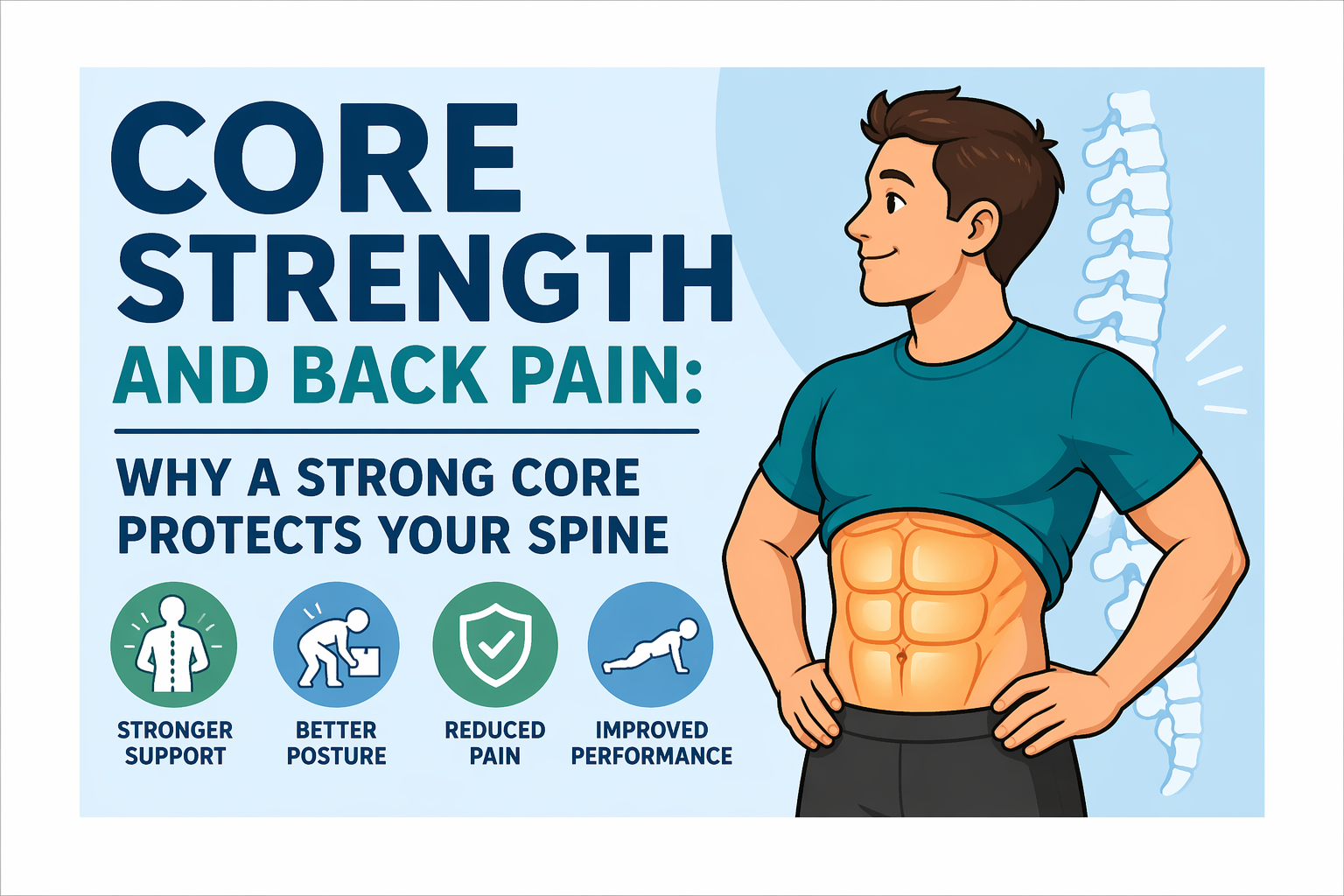
Core Strength and Back Pain: Why a Strong Core Protects Your Spine
Back pain is one of the most common reasons people seek chiropractic care.
Often, the discomfort begins gradually — stiffness in the morning, fatigue after sitting, or a dull ache after activity. Over time, weak core muscles can allow small stresses to build into persistent pain.
Typical warning signs of poor core support include:
• Recurring lower back stiffness or aching
• Pain after long periods of sitting or standing
• Discomfort when bending, lifting or twisting
• Poor posture and fatigue during the day
• Feeling unstable during exercise or movement
These symptoms often develop slowly when the muscles designed to support the spine are not working efficiently.
Why Core Strength Matters for the Spine
Your core is much more than visible abdominal muscles. It includes deep stabilising muscles around the abdomen, pelvis, hips and lower back that work together to support spinal movement.
When the core is weak or poorly coordinated:
• The spine absorbs more mechanical stress
• Joints and discs experience increased strain
• Posture becomes harder to maintain
• Muscles fatigue more quickly
• Small movements become less efficient
Without adequate support, everyday activities such as sitting, lifting, driving and exercising place repeated strain on spinal structures. Over time, this can lead to irritation, inflammation and injury.
How Chiropractic Care Can Help
Chiropractic care focuses on identifying the root causes of back pain and restoring efficient movement throughout the body.
Care may include:
• Joint mobilisation and spinal manipulation to improve movement and reduce stiffness
• Soft tissue therapy to release tight or overworked muscles
• Improving mobility in the hips and thoracic spine to reduce lower back strain
• Postural assessment and ergonomic advice
• Personalised core-strengthening and rehabilitation programmes
By restoring normal movement and improving muscle balance, the spine no longer carries unnecessary stress during daily activities.
Advanced Therapies That Support Recovery
In many cases, combining chiropractic care with advanced treatment technologies can accelerate recovery and improve outcomes.
Common supportive therapies include:
• Shockwave therapy – stimulates tissue repair and helps chronic muscle and tendon problems associated with long-standing back pain
• Medical laser therapy – reduces inflammation and promotes cellular healing in irritated spinal tissues
• Radio frequency therapy – encourages circulation and tissue regeneration in persistent or recurrent pain
• IDD spinal decompression therapy – gently reduces pressure on spinal discs and nerves
• Custom orthotics – improve foot posture and reduce stress travelling up the kinetic chain into the lower back

These therapies are particularly beneficial when pain has been present for weeks or months, or when traditional treatments alone have not fully resolved symptoms.
Simple Ways to Build a Stronger Core
Developing a stronger core does not require intense workouts. Consistency and correct technique are key.
Helpful habits include:
• Performing targeted core stability exercises regularly
• Maintaining good posture during work and daily activities
• Taking regular breaks from prolonged sitting
• Strengthening glutes and hip muscles alongside the core
• Addressing minor back discomfort early before it progresses
A strong and well-coordinated core acts as a natural brace for the spine, helping you move with confidence and reducing the likelihood of future injury.
Early assessment and personalised care can make a significant difference in preventing recurring back pain and keeping you active long-term.