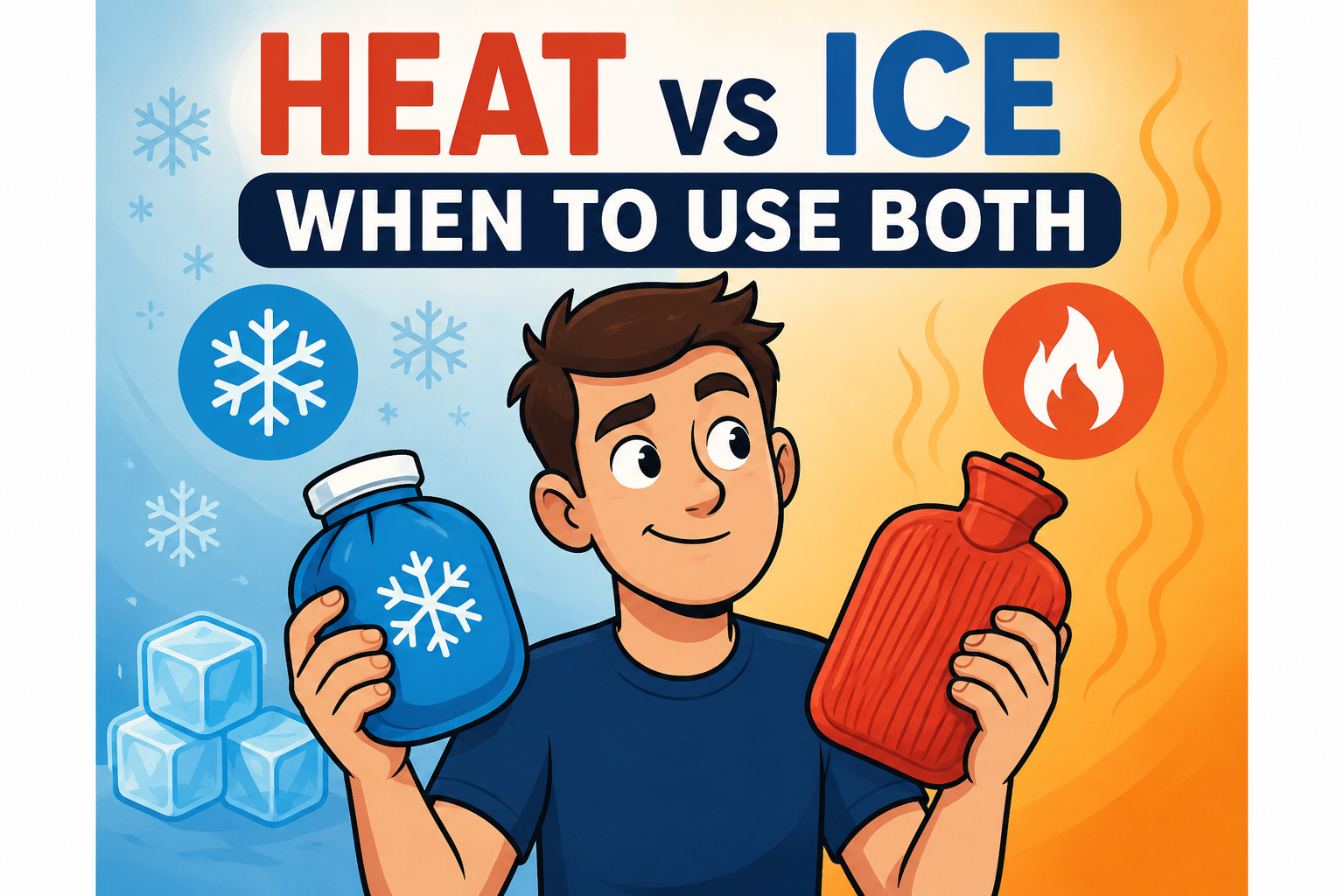
Heat or Ice for Pain? — When to Use Both for Injury Recovery
When pain appears, one of the most common questions people ask is: Should I use heat or ice?
Both can be extremely helpful — but they work in very different ways, and using the wrong one at the wrong time can slow recovery.
Understanding when to use heat, when to use ice, and how chiropractic treatment supports healing can make a huge difference in how quickly you recover.
The Role of Ice (Cold Therapy)
Ice is most useful in the early stages of an injury, especially when inflammation is present.
Cold therapy works by:
• Reducing blood flow to the area
• Limiting swelling and inflammation
• Numbing pain signals
• Slowing tissue damage after injury
Ice is typically most effective within the first 24–72 hours after an injury or flare-up.
Conditions where ice helps most
We often recommend ice for:
• Muscle strains or ligament sprains
• Acute back or neck pain flare-ups
• Sports injuries
• Swollen joints
• Tendon injuries such as tennis elbow
• Sudden shoulder or knee pain after activity
A simple rule: If the area is hot, swollen, or recently injured — choose ice first.
Apply for 10–15 minutes at a time, allowing the skin to warm again between applications.
The Role of Heat (Heat Therapy)
Heat is most useful once the initial inflammation has settled.
Works by:
• Increasing blood flow and oxygen to tissues
• Relaxing tight muscles
• Improving flexibility and movement
• Reducing stiffness and chronic pain
Heat is ideal for ongoing tension and long-term aches.
Conditions where heat helps most
Heat can be very helpful for:
• Chronic back or neck pain
• Muscle tightness and spasms
• Stiff joints
• Postural tension from desk work
• Arthritis discomfort
• Long-term shoulder or hip pain
A helpful rule: If the area feels tight, stiff, or achy — heat is usually the better option.
Apply heat for 15–20 minutes to relax tissues before stretching or gentle movement.
When to Use Heat and Ice Together
Many musculoskeletal problems move through stages of inflammation and muscle tension.
This means the most effective approach is often using both heat and ice at different times.
This combination works particularly well for:
Back and neck pain –
A common pattern we see:
• Ice reduces inflammation after a flare-up
• Heat then relaxes surrounding tight muscles
This cycle helps break the pain-spasm-pain loop.
Sciatica or disc problems –
Inflamed nerves benefit from cold therapy, while surrounding muscles often tighten protectively.
Using both therapies can calm irritation and restore movement.
Shoulder injuries –
Conditions such as rotator cuff irritation or frozen shoulder often involve inflammation and muscle guarding.
Knee pain and running injuries –
Overuse injuries often respond best to ice after activity and heat before activity.
Recovery after chiropractic treatment –
After adjustments or soft-tissue therapy:
• Ice may calm inflammation
• Heat may help maintain mobility later
Used correctly, heat and ice become powerful self-care tools between appointments.
Why Pain Often Needs More Than Home Care Alone
Heat and ice are excellent for managing symptoms — but they do not correct the underlying cause of many musculoskeletal problems.
Pain often develops because of:
• Joint stiffness or restriction
• Poor movement patterns
• Muscle imbalance or weakness
• Postural strain
• Repetitive stress and overuse
Without addressing these factors, pain frequently returns.
How Our Clinics Help Alongside Heat and Ice
At our clinics, we combine hands-on treatment with practical self-care advice to support long-term recovery.
Treatment may include:
• Chiropractic adjustments to improve joint movement
• Soft-tissue therapy to release tight muscles
• Shockwave or laser therapy for stubborn injuries
• Rehabilitation exercises to build strength and stability
• Posture and ergonomic guidance
Heat and ice are most effective when used as part of a complete recovery plan.
The Takeaway
Ice for inflammation and new injuries.
Heat for stiffness and ongoing tension.
Both together for many common back, neck and joint problems.
If pain is persistent, recurring, or affecting your daily life, professional assessment and treatment can help you recover more fully and prevent the problem returning.
If you are unsure which approach is right for your symptoms, our team is always happy to help guide you toward the best plan for recovery.