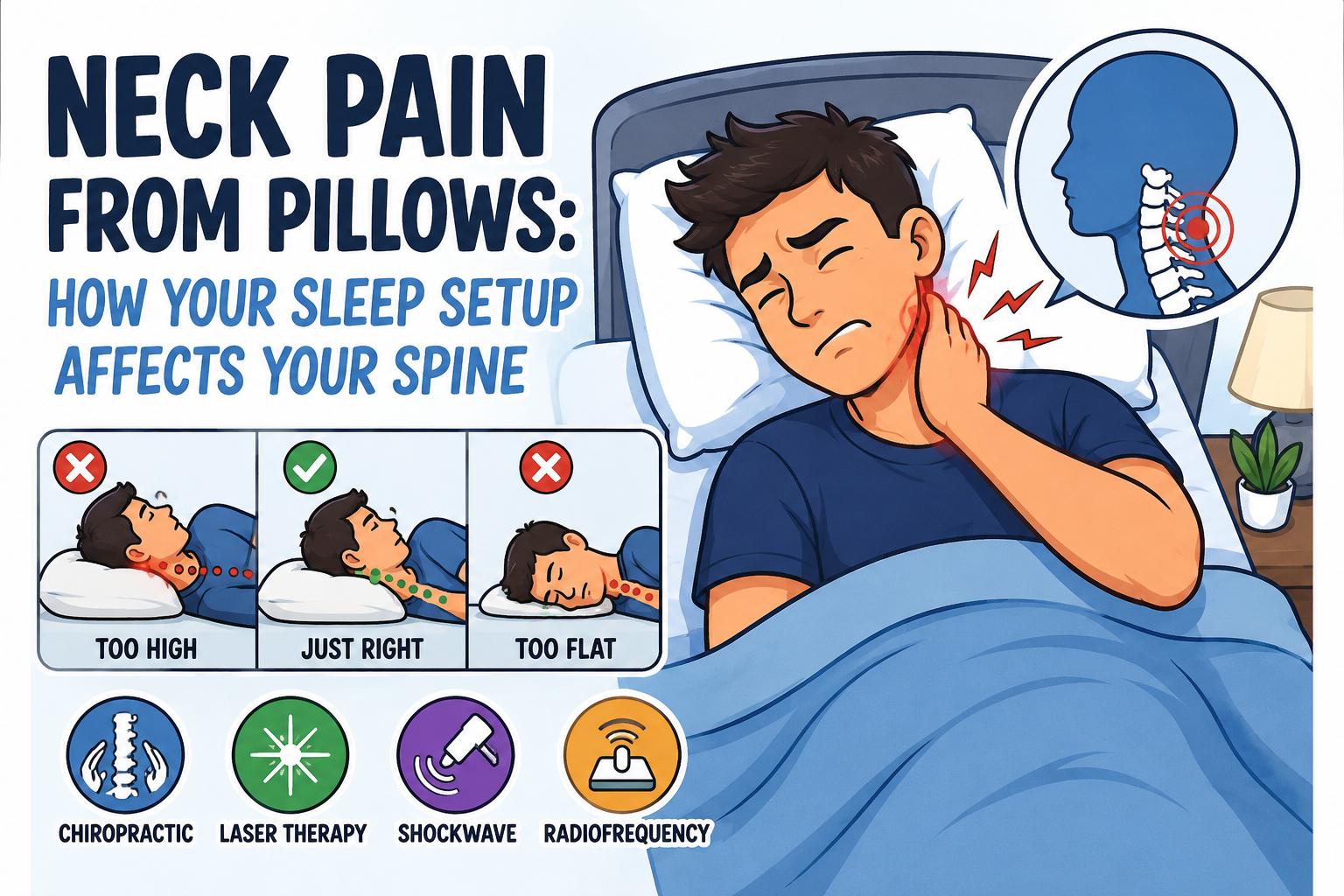
Neck Pain From Pillows: How Your Sleep Setup Affects Your Spine
Waking up with neck pain, headaches, or tight shoulders is incredibly common. Many people assume they “slept funny”, but in reality the problem is often your pillow and sleep setup. You spend around a third of your life in bed, so poor overnight posture can place hours of strain on your neck and upper spine every night.
Over time, this can lead to persistent pain, headaches and reduced mobility.
Why pillows can cause neck pain
Your neck (cervical spine) has a natural curve that needs gentle support while you sleep. If your pillow is too high, too flat, too soft, or too firm, your neck sits in an unnatural position for hours.
This leads to:
- Muscle strain and tightness
- Joint irritation and stiffness
- Nerve compression and headaches
- Reduced circulation and slower recovery
Even a small misalignment held overnight can cause symptoms that last all day.
Signs your pillow is causing problems
You may benefit from changing your sleep setup if you regularly experience:
- Waking with neck stiffness or reduced movement
- Headaches first thing in the morning
- Shoulder pain when sleeping on your side
- Tingling or numbness in arms or hands
- Pain that improves during the day but returns the next morning
These symptoms often point to overnight spinal stress rather than an injury.
How sleeping position affects your spine
Side sleepers
This is the most common position and often the biggest culprit.
If your pillow is too low, your head drops downward. If it’s too high, your neck bends upward. Both positions strain joints and muscles.
Your pillow should keep your nose aligned with the centre of your chest.
Back sleepers
A pillow that is too thick pushes the head forward and flattens the neck curve. Over time this can lead to chronic tension and headaches.
Back sleepers need a lower pillow that supports the natural curve of the neck rather than pushing the head forward.
Front sleepers
Sleeping on your stomach forces your neck to twist for hours at a time. This places significant stress on joints and muscles and is a common cause of persistent neck pain.
Why the pain doesn’t go away on its own
When your neck is stressed night after night, the body struggles to recover. Muscles tighten to protect the joints, movement becomes restricted, and inflammation builds up.
Over time this can lead to:
- Chronic neck pain
- Shoulder tension
- Headaches and migraines
- Trapped nerves
- Upper back pain
This is where professional treatment can make a major difference.
How chiropractic care helps
Chiropractic treatment focuses on restoring normal movement and alignment to the spine. When the neck joints aren’t moving properly, surrounding muscles tighten and become painful.
Chiropractic care can:
- Restore movement to stiff neck joints
- Reduce muscle tension and spasms
- Improve posture and sleeping alignment
- Reduce nerve irritation
- Help prevent recurring episodes
Alongside treatment, you’ll receive personalised advice on pillows, sleep posture and simple exercises to keep your neck healthy long-term.
Advanced treatments that speed recovery
In many cases, combining chiropractic care with advanced therapies can significantly improve recovery and reduce ongoing pain.
Laser Therapy
Medical laser therapy helps reduce inflammation and accelerate tissue healing. It is particularly effective for:
- Chronic neck pain
- Muscle tension
- Nerve irritation
- Headaches linked to neck dysfunction
Laser treatment is gentle, painless and helps the body repair itself faster.
Shockwave Therapy
Shockwave therapy stimulates healing in stubborn or long-standing muscle tension and trigger points around the neck and shoulders. It can be especially helpful when pain has been present for months or keeps returning.
Radiofrequency Therapy
Radiofrequency treatment promotes circulation and tissue repair. Improved blood flow helps reduce stiffness and supports faster healing of strained muscles and ligaments.
Small changes can make a big difference
Improving your sleep setup and addressing underlying neck dysfunction can dramatically reduce daily pain and stiffness. Many patients notice that once their neck is treated and supported properly at night, their headaches and shoulder tension improve too.
If you regularly wake up with neck pain, your pillow may be part of the problem — but it’s rarely the whole story. Treating the underlying spinal and muscular issues is key to long-term relief.