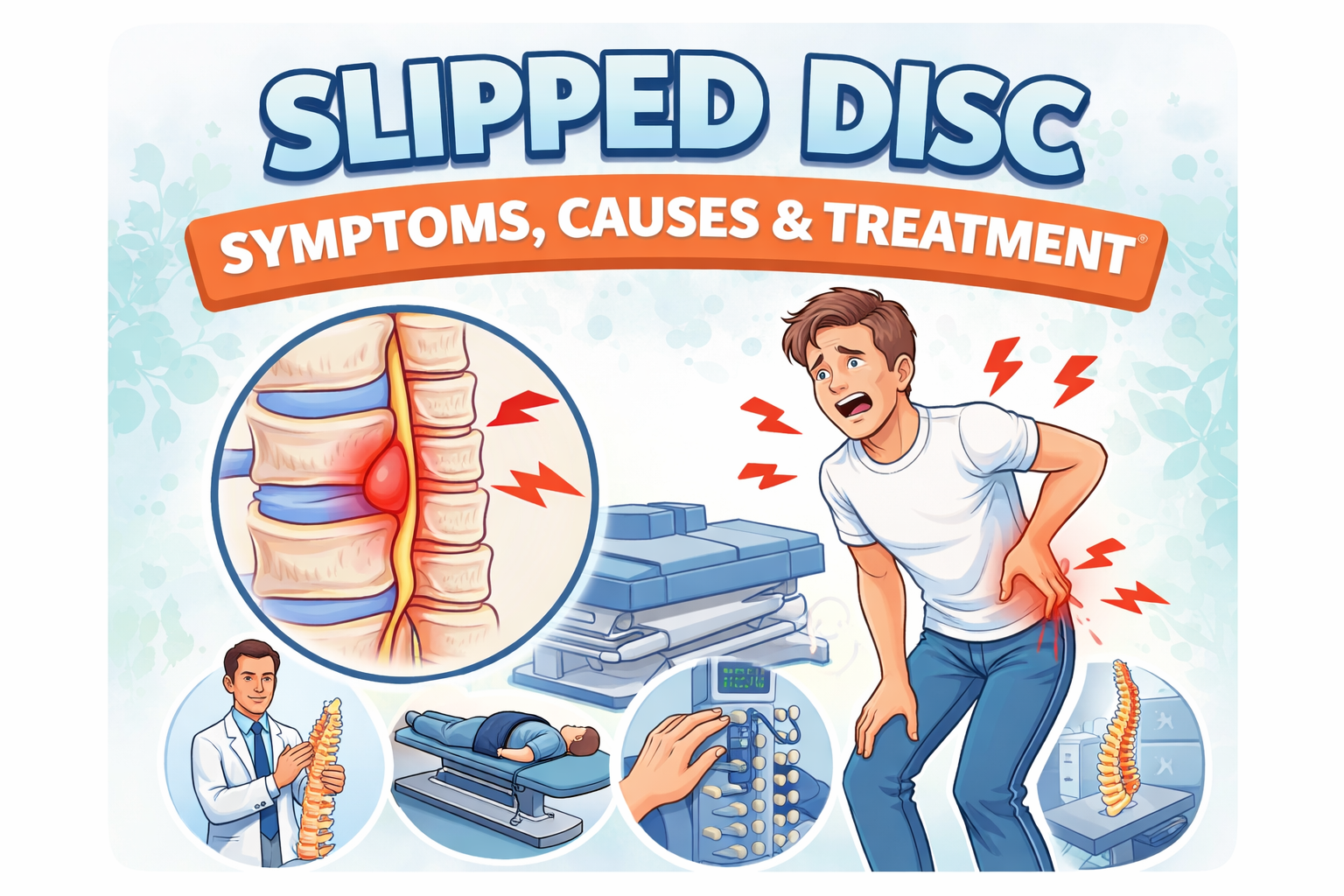
Slipped Disc Explained: Symptoms, Causes, and When to Seek Treatment
A slipped disc (herniated or bulging disc) is a common cause of back and leg pain. It can appear suddenly or develop gradually — and it often worsens without the right treatment.
What Is a Slipped Disc?
Spinal discs sit between your vertebrae and act as shock absorbers.
A slipped disc occurs when the soft inner material pushes through the outer layer and irritates nearby nerves.
Most occur in the lower back or neck.
⚠️Common Symptoms
Symptoms depend on where the disc is affected.
Typical signs include:
• Back pain that worsens when bending or sitting
• Sciatica (pain travelling down the leg)
• Neck pain with arm tingling or numbness
• Pins and needles
• Muscle weakness
• Stiffness and reduced mobility
Symptoms often start mild and gradually increase.
Why Do Slipped Discs Happen?
Usually caused by ongoing strain, not one single injury.
🚩 Common Triggers
• Poor posture and desk work
• Heavy lifting or twisting
• Weak core muscles
• Sedentary lifestyle
• Previous injuries
• Age-related wear and tear
Often a simple movement becomes the tipping point.
How It Can Affect Daily Life
Without treatment, a slipped disc can lead to:
• Ongoing pain and stiffness
• Reduced flexibility
• Trouble sleeping
• Difficulty exercising or working
• Persistent nerve irritation
Early care usually means quicker recovery.
✅ How Chiropractic Care Can Help
Treatment focuses on reducing pressure on the disc and restoring movement.
Care may include:
• Gentle chiropractic adjustments
• Soft tissue therapy
• Postural correction
• Rehab exercises and lifestyle advice
The aim is long-term recovery and prevention.
Advanced Treatments Available
We combine chiropractic care with modern therapies to support healing.
💡IDD Therapy (Spinal Decompression)
• Reduces disc pressure
• Encourages healing
• Helps relieve nerve compression
• Improves blood flow
• Stimulates repair
• Reduces inflammation
• Supports tissue healing
• Helps manage pain
📡Radio Frequency Therapy (TECAR)
• Boosts circulation
• Relaxes tight muscles
• Speeds recovery
🧠Rehabilitation & Core Strengthening
• Improves stability and posture
• Helps prevent future flare-ups
When Should You Seek Treatment?
Consider booking an assessment if you notice:
• Pain lasting more than a few days
• Pain spreading into arms or legs
• Numbness or tingling
• Difficulty bending or moving
Early treatment can make a big difference in recovery and long-term spinal health.