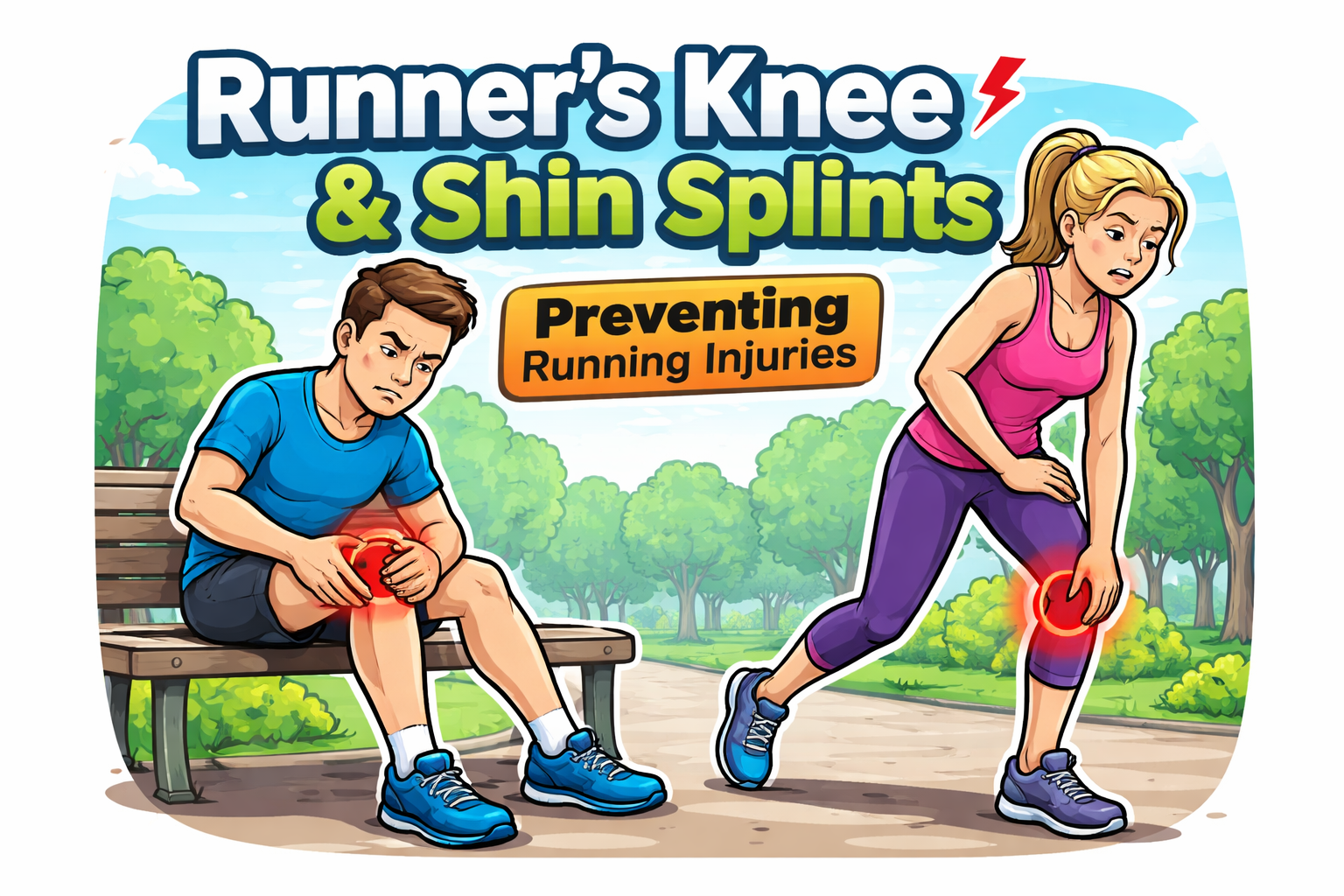
Runner’s Knee and Shin Splints: Preventing Common Running Injuries
Runner’s knee and shin splints are two of the most common overuse injuries affecting runners.
They often begin as a small ache. Something easy to ignore.
Over time, that discomfort can become persistent pain that stops training completely.
Typical warning signs include:
• Pain around or behind the kneecap
• Tenderness or aching along the shinbone
• Tight calves or hamstrings
• Pain after longer runs or downhill running
• Discomfort after sitting for long periods
These injuries rarely appear overnight. They build gradually when the body is placed under repeated stress without proper support or recovery.
Why These Injuries Develop
Running places forces of up to three times bodyweight through the legs with every step.
When movement patterns are not efficient, certain muscles and joints work harder than they should.
We commonly identify contributing factors such as:
• Weak hip and glute muscles
• Reduced ankle mobility
• Poor foot mechanics or over-pronation
• Sudden increases in distance, speed or hills
• Inadequate rest and recovery between runs
Small imbalances repeated thousands of times can quickly lead to irritation and inflammation.
How Chiropractic Care Can Help
Chiropractic care focuses on identifying the root cause, not just treating the symptoms.
Care may include:
• Joint mobilisation and manipulation to improve movement
• Soft tissue therapy to release tight muscles
• Improving mobility through the hips, knees and ankles
• Personalised rehabilitation and strengthening exercises
• Advice on training load and injury prevention
The aim is to restore efficient movement so stress is no longer concentrated on the knee and shin.
Advanced Therapies That Support Recovery
We often combine chiropractic care with advanced modalities to enhance healing and speed recovery:
• Shockwave therapy – stimulates tissue repair and helps persistent tendon or shin pain
• Medical laser therapy – reduces inflammation and supports cellular healing
• Custom orthotics – improve foot posture and reduce stress travelling up the leg
These therapies can be particularly helpful when symptoms have been present for weeks or months.
Simple Prevention Tips for Runners
A few simple habits can significantly reduce injury risk:
• Increase mileage gradually rather than suddenly
• Include strength training alongside running
• Warm up before runs and prioritise recovery
• Rotate running shoes and monitor wear
• Address small aches early before they progress
Early care helps keep runners active, comfortable and confident.