💤 How Sleep Position Affects Spine Health
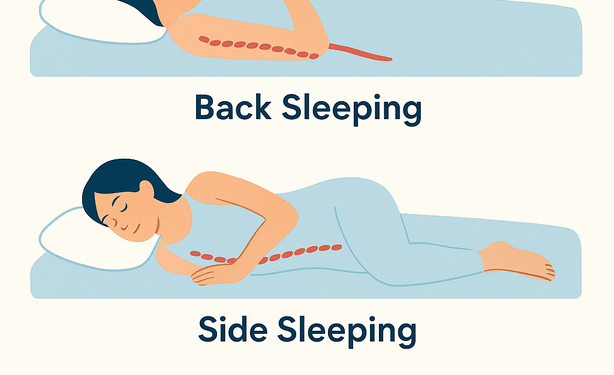
A good night’s sleep does more than just help you feel refreshed — it’s essential for your spine’s health. The way you sleep each night can have a direct impact on your posture, spinal alignment, and even your risk of developing chronic pain. At Isis Chiropractic Centres, we often remind our patients that how you sleep matters just as much as how you sit or stand during the day. Understanding how sleep position affects spine health can help you make better choices for a more comfortable, pain-free rest and a healthier back overall.
Let’s explore how different sleep positions affect your spine, and what you can do to support your back while you rest.
🦴 Why Spinal Alignment Matters During Sleep
Your spine is made up of small bones (vertebrae) that protect your spinal cord and support your body’s structure. When your spine is aligned correctly, your muscles and ligaments can relax, and your nerves can function properly.
But if your spine is misaligned for hours every night due to poor sleep posture, it can lead to:
- Morning stiffness or soreness
- Back and neck pain
- Tingling or numbness in the arms or legs
- Headaches caused by tension in the neck
Proper sleep posture helps your spine maintain its natural curves — cervical (neck), thoracic (mid-back), and lumbar (lower back).
😴 Best and Worst Sleep Positions for Your Spine
1. Sleeping on Your Back (Best Overall)
Sleeping on your back allows your spine to rest in a neutral position. To get the most benefit:
- Use a medium-support pillow under your head and neck.
- Place a small pillow under your knees to reduce pressure on your lower back.
- Make sure your mattress offers even support from shoulders to hips.
✅ Best for: Neck and back pain prevention, maintaining spinal alignment.
2. Sleeping on Your Side (Good Alternative)
Side sleeping can also support spinal health — especially if you place a pillow between your knees to keep your hips aligned.
- Keep your head pillow thick enough to fill the space between your shoulder and ear.
- Avoid curling tightly into a fetal position, which can stress your neck and back.
✅ Best for: Reducing snoring, supporting pregnant women, relieving lower back pressure.
3. Sleeping on Your Stomach (Least Recommended)
While some people find stomach sleeping comfortable, it’s generally hard on the spine. It flattens the natural curve of your back and forces your neck to twist to one side for hours.
If you can’t sleep any other way:
- Use a very thin pillow (or none at all) under your head.
- Try placing a small pillow under your stomach to reduce lumbar strain.
🚫 Worst for: Neck pain, spinal misalignment, long-term back issues.
🛏️ Tips for Better Sleep Posture
Even small changes can make a big difference:
- Invest in the right mattress: Medium-firm mattresses usually offer the best spinal support.
- Replace your pillow every 1–2 years to ensure it keeps proper shape and height.
- Stretch before bed to relax tight muscles and promote natural alignment.
- See your chiropractor regularly to correct postural imbalances that affect your sleep.
🌟 Final Thoughts
Your spine works hard all day — make sure you’re giving it the rest it deserves at night. By choosing the right sleep position and maintaining proper spinal alignment, you can reduce pain, sleep more comfortably, and wake up feeling truly refreshed.
If you’re experiencing back or neck pain that worsens in the morning, it might be time for a spinal alignment check.
👉 Contact us today to schedule a consultation and get personalised advice for better sleep and better health.